.png)

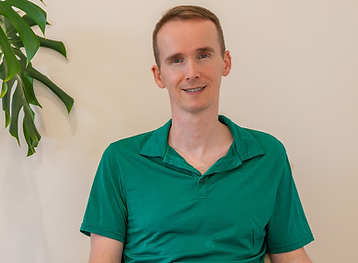
Moving towards a life that feels contented, connected and worthy
I first studied psychology because I believed in a future where we all had the skills, space and support to live lives that feel contented, connected and worthy. Almost two decades later, my work is about helping adults, especially other gay men, move toward that kind of life in a realistic, steady and evidence-based way.
I do not see therapy as fixing a broken person. I see it as us getting curious together about how your mind and body have tried to protect you, and then creating new options for how you want to live now.
A calm, non-judgmental space
I have been told I am a quiet guy with a soothing voice. In the room, this shows up as a calm and non-judgmental space where all parts of your story are welcome. This includes the parts you feel proud of, the parts you feel uncertain about, and the parts you feel ashamed of.
We pay careful attention to safety, both emotional and physical. We go at a pace that feels manageable to you, so that you are not pushed into work you are not ready for. My role is to be a steady companion while we explore difficult experiences, not to tell you who you should be.
Evidence-based, tailored to you
I use an eclectic mix of evidence-based approaches, including Schema Therapy, Acceptance and Commitment Therapy (ACT), EMDR and Cognitive Behavioural Therapy (CBT). Rather than following a single manual, I draw from a bag of useful ideas and exercises, and we choose together what fits you best.
Sometimes that looks like structured skills practice. Other times it involves deeper exploration of early memories, core beliefs, and long-standing patterns in relationships. Throughout, I focus on making things understandable and practical, so you can see how the work in session connects to what happens in your daily life.
Working with shame, trauma and identity
So much of my clinical work loops back to shame. I care deeply about how early experiences, especially in heteronormative or unsupportive environments, can create lifelong shame and self-blame. I am outspoken about naming this, and about helping people see how these beliefs were formed and why they are not the full truth about who they are.
My approach is strongly shaped by trauma-informed practice and a queer and neurodivergent-affirming lens. I will never judge you for who you are, who you love, or how you have coped up until now. Together, we work toward building more stable relationships, stronger self-compassion, and a life that feels more like your own, not just a performance for others.